What California law says a move-out clean is for
California Civil Code 1950.5 lets a landlord use a security deposit for the cleaning needed to return the unit to the same level of cleanliness it was in at the inception of the tenancy. Same-level-of-cleanliness is the standard. The same section says a landlord may not require a tenant to pay for professional carpet cleaning or other professional cleaning services, unless reasonably necessary to return the premises to the condition it was in at the inception of tenancy, exclusive of ordinary wear and tear. The deposit math itself is between you and the landlord, and the specifics on a particular lease belong with the lease.
About 53 percent of San Diego households rent, so this guide is written for a city of renters.
Empty first, then clean
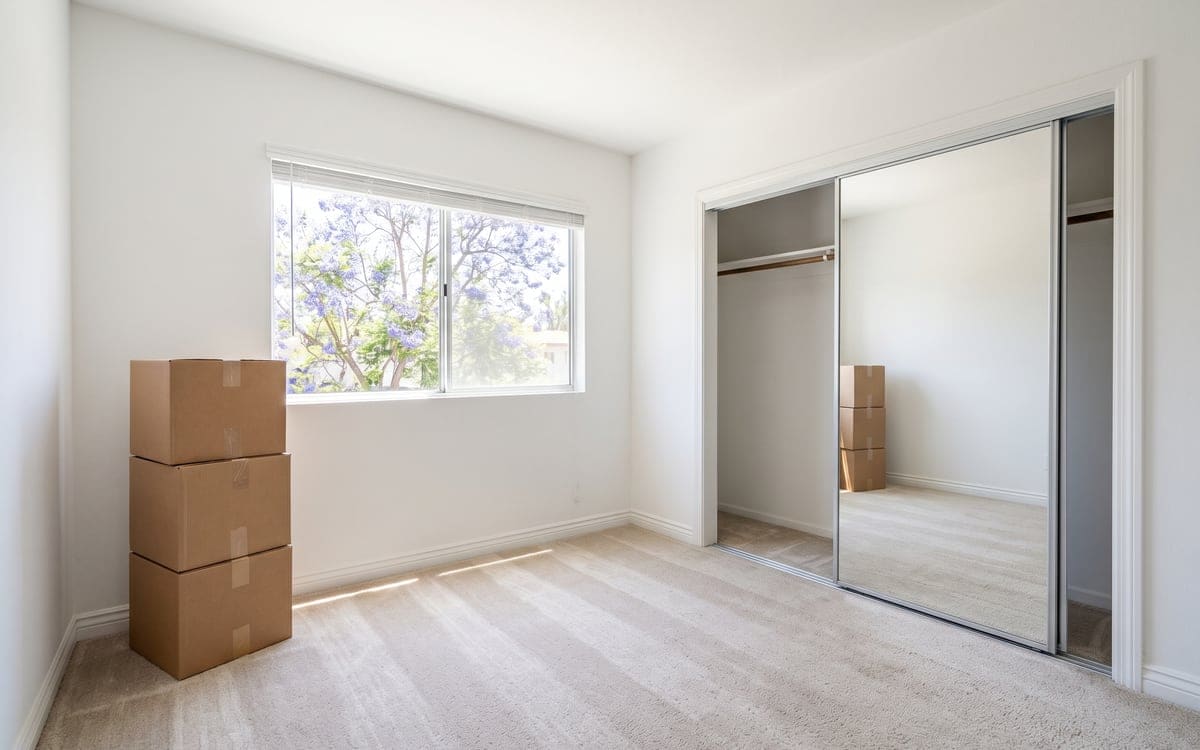
Boxes, closets with clothes still hanging and a fridge half full get in the way of every pass that follows, so an empty unit is easier to reach every surface in. Pack the last load and start the cleaning once the rooms are bare. A plan that cleans the bathroom with the shampoo bottles still on the shelf touches the bathroom twice.
Kitchen: inside every cabinet and appliance
Walk into the kitchen and work top down. High dusting is done from the floor; anything out of reach is left alone. The hood over the stove collects a brown film that a wipe lifts in short strokes.
Pull everything from the fridge and the freezer. The sink gets a scrub around the rim and under the lip of the faucet, where mineral spots build up. The stove comes apart the way the manual shows and goes back together once the drip pans, grates and burner caps are cleaned.
Counters get wiped twice, once for crumbs and once for the sticky ring that was under the toaster. Open every drawer. Every cabinet door comes open for a wipe on the fronts, pulls and inside shelves within reach from the floor.
Bathrooms: glass, grout and fixtures
A bathroom packs a lot of surfaces into a small room, from film on the shower glass to scum on the tile and dark lines of grout. Work the tub or shower first because it needs the longest to dry. Scrub the grout where it has darkened. Lift the toilet seat and wipe the hinges. The vanity top, the mirror, the inside of the medicine cabinet and the baseboards behind the door come last.
USGS classes water above 180 milligrams per liter of hardness as very hard, and the City's 2025 report shows all three plants averaging above that line (237, 242 and 243 ppm), so the shower glass and the faucets usually need more attention than the fittings themselves. Never mix bleach with ammonia, vinegar or any other cleaner, and no recipes from a video on the counter. One product at a time.
Bedrooms and closets
Every closet gets a look inside. Pull out the shelf liners if they are old, wipe each shelf you can reach from the floor and vacuum the closet floor with a wand attachment. Anything that would need a stool or a chair to reach stays alone. Check the inside of each cabinet door for something taped to it, because landlords find those and renters forget them.
A living room with furniture gone shows every scuff on a wall and every nail hole next to the window.
Walls, doors, sills and tracks
For light scuffs, use a soft damp cloth on a hidden spot first. Damaged or peeling paint belongs to the landlord, not a scraper, and old paint in older buildings is never sanded or dry-swept. Dust the baseboards and the tops of the window and door frames you can reach from the floor. Vents and switch plates finish the room.
Window tracks hold a thin layer of grit. Clean the glass with a flat squeegee, then clean the track with a cotton swab for the corners. Outside windows above the ground floor stay with a window cleaner.
Floors last, and where mop water goes in San Diego
Floors are the final step. Vacuum every room, under where the bed was, under the couch and the carpet in a bedroom closet. Wet-mop a hardwood floor only if the finish is in good shape, and use less water, not more. Tile and vinyl take a damp mop with a mild cleaner. Work from the far corner of the apartment toward the front door, so you do not walk back across what has dried.
The San Diego Municipal Code defines the storm drain system as including municipal streets, catch basins, curbs and gutters, and the City's Think Blue program names mopping among the wash water sources that must never enter it. The street and the gutter outside the home are part of that same system.
Your own photos at the end
California now requires the landlord to take photos as part of the move-out itself.
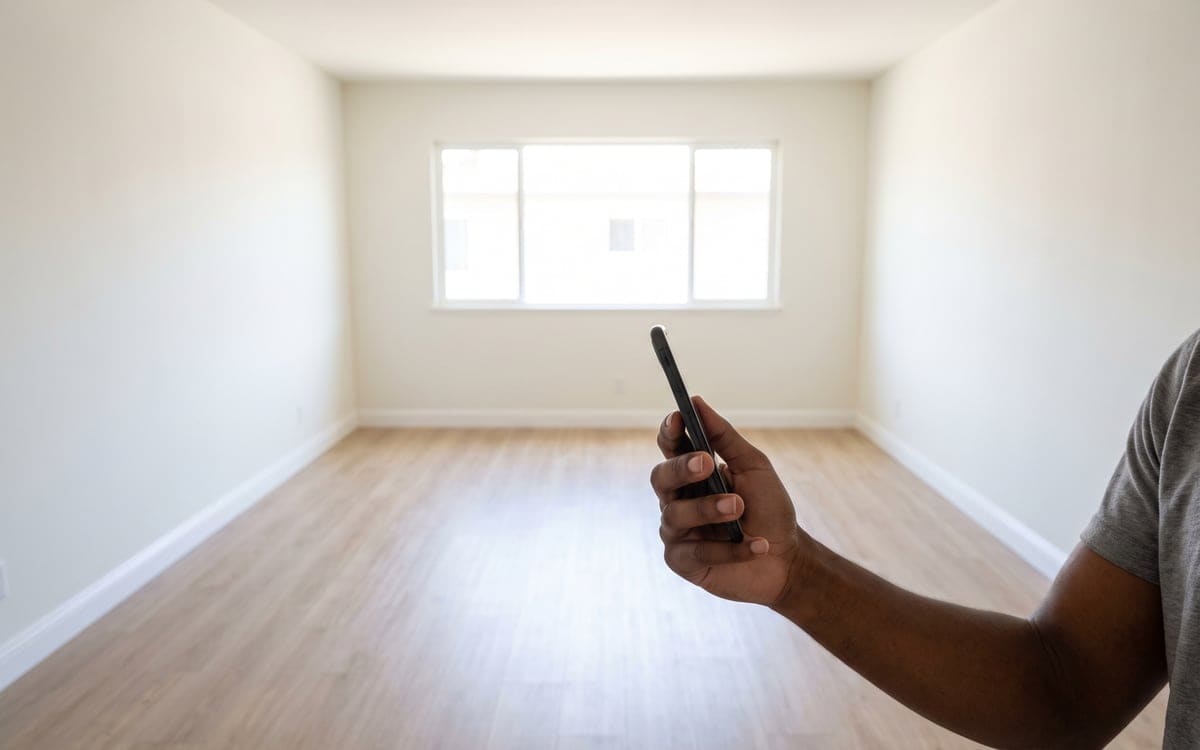
Take your own photos too. Walk the empty rooms with a phone, open every closet and every cabinet and shoot each one with the light on. Shoot the shower glass, the kitchen floor, the inside of the oven and the top of the stove. These are your record. The questions a particular deposit raises belong with the lease, the landlord and, where it matters, a lawyer.
Food, trash and leftover cleaners
The last trip to the trash chute is not where a move-out ends. A few things do not go there in San Diego.
Mop water and bucket water go down a sink or toilet in the home. The City's refuse rules say liquids of any type do not go in the trash, recycling or green bin, so a bucket is not emptied into a bag or a bin.
Food scraps, food-soiled paper and paper towels go in the green bin or the kitchen pail along with yard trimmings. Plastic bags, including the ones labeled compostable, are not accepted in green bins in San Diego, so the food goes in and the bag it came in goes to the trash.
Leftover cleaners under the sink do not go down the drain and they do not go in the trash. The City says items labeled Caution, Warning, Danger, Poison, Toxic, Flammable or Corrosive must go to a collection facility, not into the trash or poured down drains, and City residents can drop household hazardous waste at the City's HHW Transfer Facility by appointment, with proof of City residency. A cleaning crew cannot take old chemicals away, and the City facility does not accept business waste, so the drop-off is a trip for the resident.
Where the leftovers of a move-out go in San Diego
The City's rules for mop water, food scraps and old cleaners, so nothing ends up in the street or the wrong bin.
Down a sink or toilet
- Mop water and bucket water
- Never the street, a gutter or a storm drain
- Liquids never go in any bin
The green bin or kitchen pail
- Food scraps from the fridge
- Paper towels
- No plastic bags, even compostable ones
The City's hazardous waste facility
- Leftover cleaners with warning labels
- City residents, by appointment
Sources: Think Blue San Diego (City of San Diego Stormwater Department), Process & Wash Water fact sheet, 2026 (PDF); City of San Diego Environmental Services, General Refuse Collection Information and Rules; City of San Diego Environmental Services, Organic Waste Recycling Frequently Asked Questions; City of San Diego Environmental Services, Organic Waste Recycling: Good for the Green Bin; City of San Diego Environmental Services, Household Hazardous Waste.
The checklist, one page
Keep this near the kitchen counter on the last day.
| Room | What to clean | Easy to miss |
|---|---|---|
| Kitchen | Inside and outside of the fridge and oven, stovetop pieces, hood, cabinet fronts and interiors you can reach, drawers, counters, sink | The reachable front edge under the fridge, the backs of drawers, under the toaster |
| Bathrooms | Tub or shower, tile and grout, toilet inside and out, vanity, mirror, baseboards | Behind the toilet, inside the medicine cabinet, the shower-door track |
| Bedrooms | Baseboards, window and door frames you can reach, vents, closet floor and reachable shelves | Behind the door, the inside of the closet door, where the bed stood |
| Living areas | Switch plates, baseboards, window sills, scuffs on walls | Cords and the floor around the TV, where furniture stood, the inside of the front door |
| Floors | Vacuum carpets, damp-mop hard floors, work toward the front door | Transitions between rooms, the reachable front edge under the stove, closet carpet |
| Entry | Mop the entry twice, wipe the inside of the door | Door frame, threshold, the kick plate below the handle |
What belongs to the landlord or another trade
Holes and paint belong to the landlord or a painter. Carpet shampooing, duct work and anything that smells musty or spreads on drywall after a leak are other trades. A move-out cleaning service works through the full list in an empty space from the top down, and the new place can be cleaned before the furniture arrives. Deep or regular covers what a deep clean adds over a maid visit while you still live there, and a cost guide walks through what moves the price on an end-of-lease job. For apartments and condos in buildings with a gate code or a front desk, the apartment cleaning page covers how building access gets handled.