How the dust comes off after a remodel
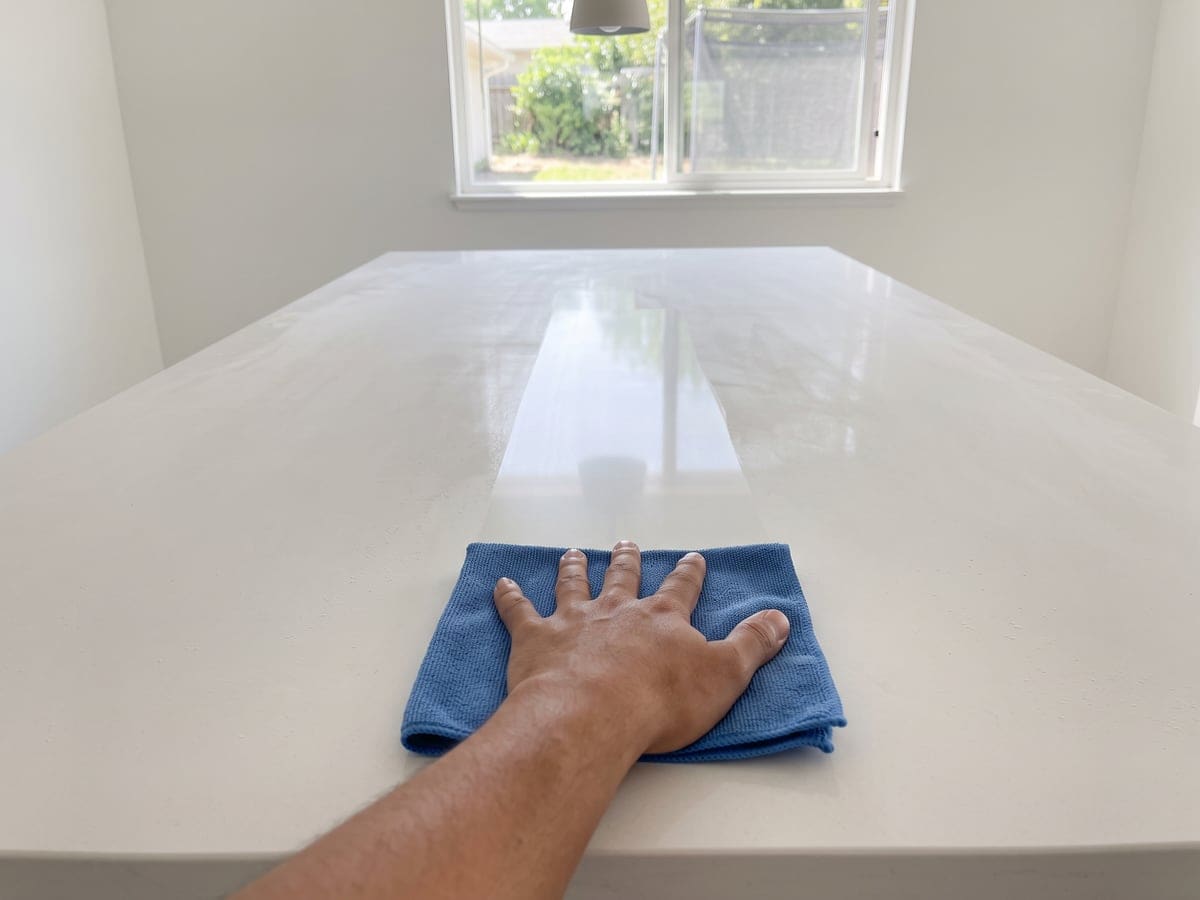
Fine remodel dust takes two passes, because it lands on surfaces that have already been wiped, so the catch surfaces (sills, baseboards, cabinet tops) come up a second time near the end of the visit. The order below moves from the highest surfaces down. The visit opens with a walk through the finished rooms with you: what is ours (the dust, the film on the glass, the inside of new cabinets) and what belongs to the builder's rough clean (packaging, offcuts, protective film on appliances, labels on glass) are separated at the start.
1. Dust from the top down, worked from the floor
Dust comes off vents, light fixtures, the top of a range hood, the top edge of upper cabinets, the top of a door frame, the ceiling fan and the top of a shelf. All of it worked from the floor, with the dust falling to a surface we have not touched yet.
2. Inside every new cabinet and drawer
A new cabinet looks clean until a hand goes across the shelf. Each cabinet opened one at a time, shelves wiped front to back, drawer boxes wiped, the inside of the toe kick wiped, and the hardware on each pull gone over. Drawer bottoms where sawdust from the cabinet shop still sits get an extra pass.
3. Counters, sills, window tracks and door frames
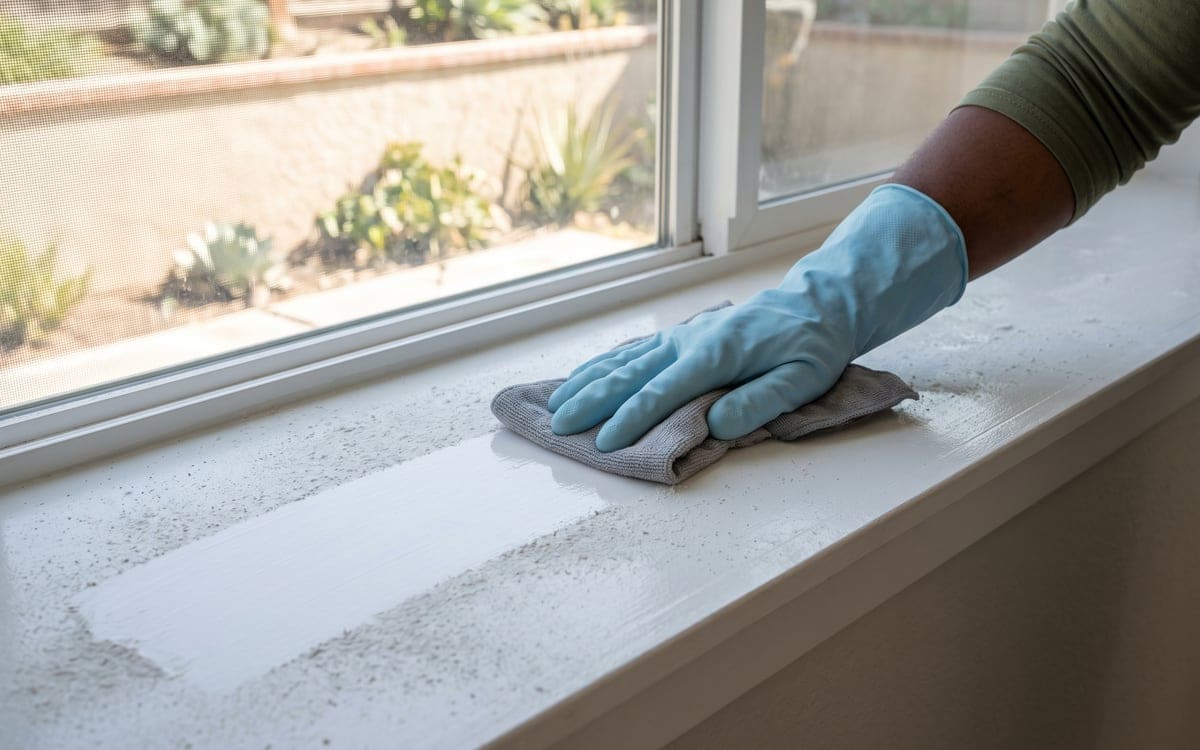
Counters wiped, including the back edge where the splash guard meets the wall. New window sills wiped, with the tracks vacuumed then wiped out. Door frames and the tops of baseboards wiped. The second pass finishes these catch surfaces late in the visit.
4. Fixtures and glass
New faucets and shower heads polished of any installation film. The inside glass on every new window gone over, with the frames and the sills. A new mirror and the medicine cabinet wiped. The inside of the oven, the fridge and the microwave if they were installed on the job.
5. Floors last, vacuumed then mopped
Fine dust lives in the corners. A full vacuum of every floor, then a mop pass.
| Surface | Why the dust stays | How it comes off |
|---|---|---|
| Vents and the tops of upper cabinets | Air moves dust up before it settles, and it settles there | Dusted from the floor, worked slow |
| Window sills and tracks | A screened window still lets dust in while a saw runs | Vacuumed first, then wiped out |
| New cabinet shelves | Sawdust from the cabinet shop lingers in the grain | Wiped front to back, one shelf at a time |
| Baseboards and door frames | Dust in the air falls on every flat surface, high or low | Wiped on a first pass, wiped again on a second pass |
| Shower glass and fixtures | Installation film and plaster haze set once dry | Wiped off, polished dry |
| Floors | Corners and the edges along baseboards collect dust | Vacuumed first, then mopped |
When post-construction cleaning fits, and when other work comes first
When this is the right page
The trades are done. The debris is gone, loaded in the builder's dumpster or hauled off by a hauler, not left for us. The walls and the ceiling are painted and dry. Appliances are installed. The place is ready to be used, and the only thing between the finished rooms and daily life is the dust the job left behind.
When another service fits, or another trade
Rough clean during the job is the builder's or the general's call, not ours; we pick up at the final clean. Hauling debris, packaging, offcuts, drop cloths, old cabinets, old appliances or leftover materials belongs to the builder or a hauler. Painting, caulking, patching, drilling or re-plumbing fixtures are repairs, not cleaning. Duct cleaning after a dusty job is an HVAC trade. For an everyday catch-up in a home that has not had any recent work, a deep clean is the one. For a new place you are about to move into, see a move-in clean before the boxes and tell us if any of the rooms are post-remodel. The full list of what we do and what we leave to other trades lives on the services hub.
What the visit covers
The dust on every surface, inside new cabinets and drawers, counters, sills, window tracks, door frames, fixtures, glass, inside the new appliances where they were part of the job, and the floors last. We go over products on the call, including anything the builder or the manufacturer recommended for finishes (new stone, new stainless, a shower glass coating). We do not haul debris, materials, packaging or old fixtures; we do not patch, paint, caulk or seal; we do no touch-up on the trades' work; and we make no claim about anything inside the walls, the paint or the dust itself.
From the call to the final look
- You call with the address, the kind of work (kitchen, bath, ADU, whole-house), the day the trades finished and anything the builder or the manufacturer said about the new finishes.
- We go over what is ours and what belongs to the builder, the rooms, products and how we get in.
- You get a price for the visit and decide.
- The cleaning happens, with the catch surfaces wiped on a first pass and a second pass, and we walk the rooms with you at the finish.
Remodels across San Diego's mixed-age homes
San Diego gets remodeled on homes of every age, and no single era carries most of the housing. The Census count by decade spreads the city's housing across the whole century.
We ask on the call what kind of home the work was done on and whether anything in the finish needs a particular touch, and we work the dust off the surfaces in the order above.