What a maid service visit covers
Our cleaners work a room-by-room pass that starts dry and high and finishes wet and low, so dust taken off a shelf never lands on a floor the mop has already covered. The visit works in four stages.
1. The notes from your call, then the dusting
Before any bottle is opened, the notes from your call come out: which rooms matter most, the problems you want solved first, what the sink gets left with, where the dog or the cat spends the day. Drawers stay closed, personal items stay in place, and nothing on the floor gets sorted unless you asked for it. High dusting then comes down from the floor: ceiling fans, vents, light shades, and the tops of upper cabinets and door frames. Cleaners work from the floor; anything out of reach is left and named back to you.
How a maid service visit moves through a home
High to low, floors last.
Dust high first
Fans, light fixtures and tops of shelves, dusted from the floor.
Kitchen surfaces
Counters, the sink, the stovetop and the fronts of each appliance.
Bathrooms
Shower or tub, toilet, vanity and mirror, with the water spots wiped off.
Floors last
Vacuumed, then mopped.
2. The kitchen and the bathrooms
The counter runs are cleared where you have left them clear and wiped end to end. The sink goes next, down past the taps and over the rim where soap collects. On the stovetop, grates come off, burner wells are wiped, and the grates go back once the surface is dry. The outside of each major appliance gets the same pass: the fridge door and handle, the oven face, the dishwasher front, the microwave door and handle, with the dust taken off the top of each. The wall above the range is a separate pass of its own, since cooking spray collects there layer by layer.
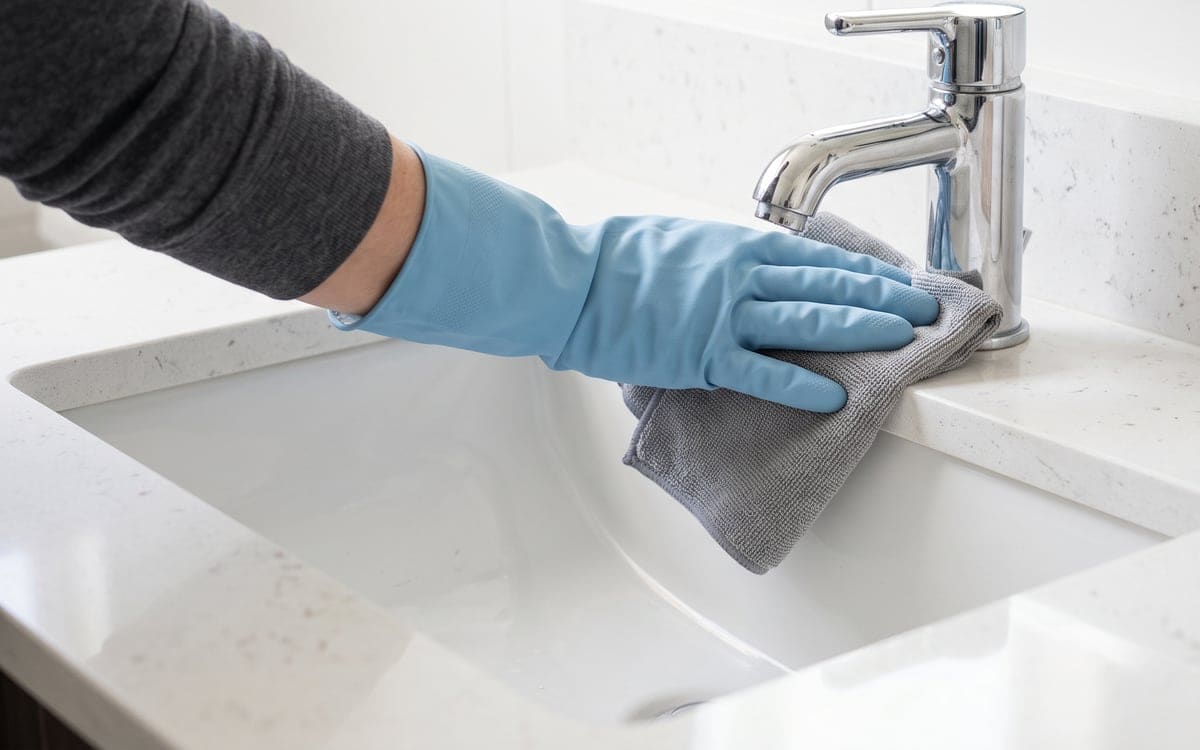
The bathroom runs on the same floor-up rule. Shower or tub is cleaned with no reaching across the rim. Panes of shower glass are addressed on their own where the bathroom has them, because the film the water leaves is a different job from the tile around it. Toilet inside and outside, around the base and behind, then on to the vanity, taps and mirror. The light shade is dusted from the floor. San Diego City tap water averaged 237 to 243 parts per million of total hardness across the three treatment plants in 2025, and USGS says hard water leaves spots or film on glassware and makes soap scum. That is the layer the bath pass works through. The bathroom floor goes last on this step, with the mop pushed behind the base of the toilet as far as the fixture allows.
3. Bedrooms, living rooms, and anything you want left alone
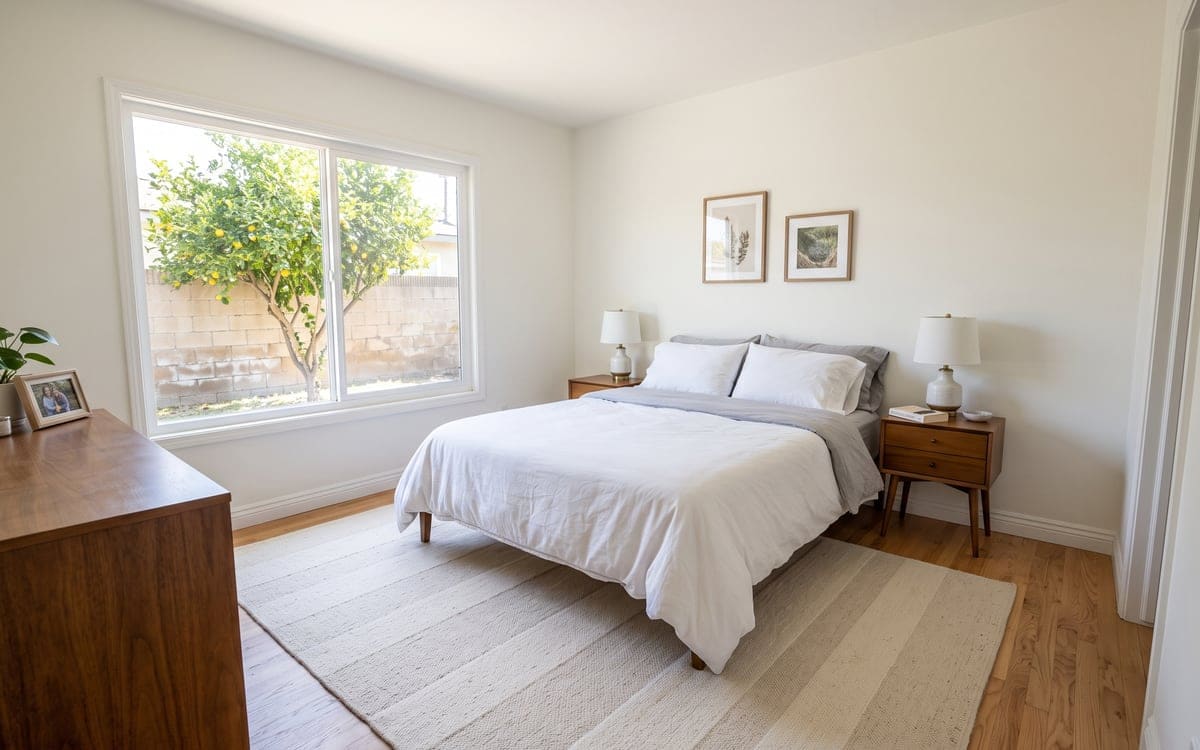
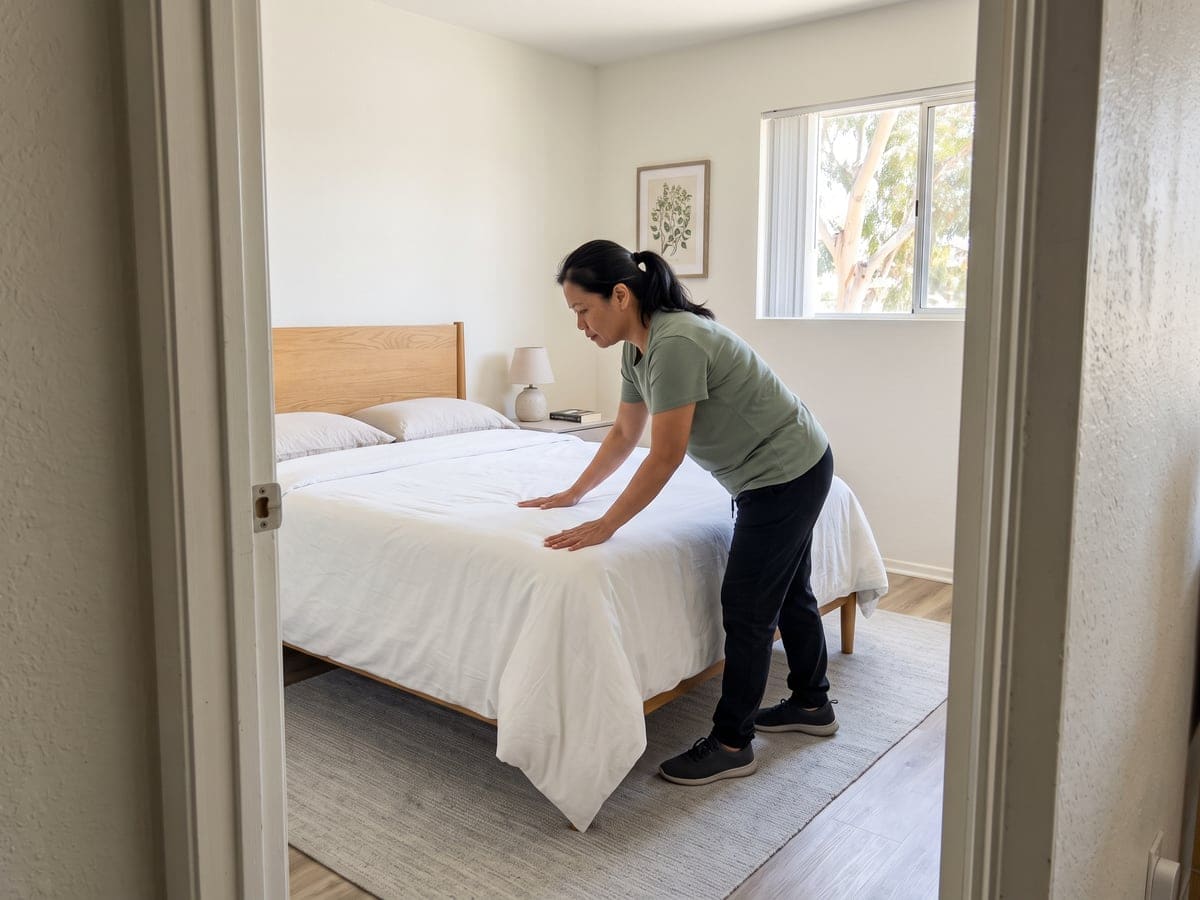
Hard surfaces are dusted and wiped across the room: side tables, nightstands, dressers, bookshelves and headboards. Mirrors and framed glass are addressed too. Beds get made where you ask us to make them, using the linens you have left out for us. Anything we are unsure about on the floor stays exactly where you set it down, and we leave a note if a decision needs you.
4. Floors last, and a walk-through at the end
Hard surfaces are vacuumed first, then washed down. Rugs are vacuumed in place; smaller rugs can be turned where the backing lifts cleanly. Edges along baseboards and into corners come as part of the pass. Any room that needs a wet carpet extraction is a different trade, and we stop at the vacuum pass. If you are around at the end, the rooms get a walk-through together before we close out, so you see each one. If you are out, we leave the place set the way the call described.
| Room | What a standard visit covers | What moves it to a deep clean |
|---|---|---|
| Kitchen | Counters, sink, stovetop, outside of appliances, backsplash | Inside the oven, inside the fridge, cabinet fronts, range hood face |
| Bathroom | Shower or tub, toilet, vanity, mirror, floor | Grout lines, water film on shower glass, behind the toilet |
| Living room | Surfaces, mirrors, glass, floors | Baseboards, door frames, switch plates, under furniture |
| Bedroom | Surfaces, bed made on request, floors | Under the bed, closet shelves, window sills |
| Entry and hall | Surfaces, floors | Baseboards and door frames top to bottom |
| Dining area | Table, chairs, surfaces, floors | China cabinet fronts, chair legs by hand |
Where more than one or two rows read like your place, a deep clean first is the better starting line, with a maid service rhythm picking up after.
When a maid service fits, and when another service fits
When a maid service fits
The place is in reasonable shape and you want it kept there. The two spots that bother you most are the kitchen and the bathroom. You want a rhythm you can leave for a roommate or a partner to track. You already had a thorough catch-up pass this year.
When to start somewhere else
A long gap since the last top-to-bottom clean argues for a deep clean to start. Rooms that are already empty belong on move-out cleaning before the keys go back. If no rhythm is wanted at all, one visit, no schedule is the page. If the household prefers fewer products on the counter, a visit built around fewer products, or your own can be set up across any of these.
We sort which one fits on the call. The same call settles whether weekly or an every-other-week schedule suits what the home is doing, and whether a visit in a condo or apartment building needs anything agreed with us before the day.
What the visit covers
A maid service visit works the rooms you list, in the order above. Products get agreed on the call, your own or ours, so nobody is guessing on a stone counter or around a cat.
What moves a cleaning price carries the drivers, and what a standard cleaning includes carries the room-by-room list.
From your call to the finished rooms
- You call and tell us about the place: rooms, bathrooms, how we get in, parking, pets, and what matters most.
- We plan the visit with you, including products and anything to leave alone.
- You get a price and decide.
- The cleaning happens, with a walk-through at the end if you are home.
Maid service in a San Diego home
Households in the city average 2.52 people, and about 29 percent of them are one person on their own. Two bedrooms is the most common size, with about 55 percent of housing units at two bedrooms or fewer. A smaller place is still a kitchen, a bath and the floors between them; a bigger home adds rooms to the same list without changing the shape of the visit. The questions on the call stay the same at any size: who is in each room, what bothers you most and what to leave alone.