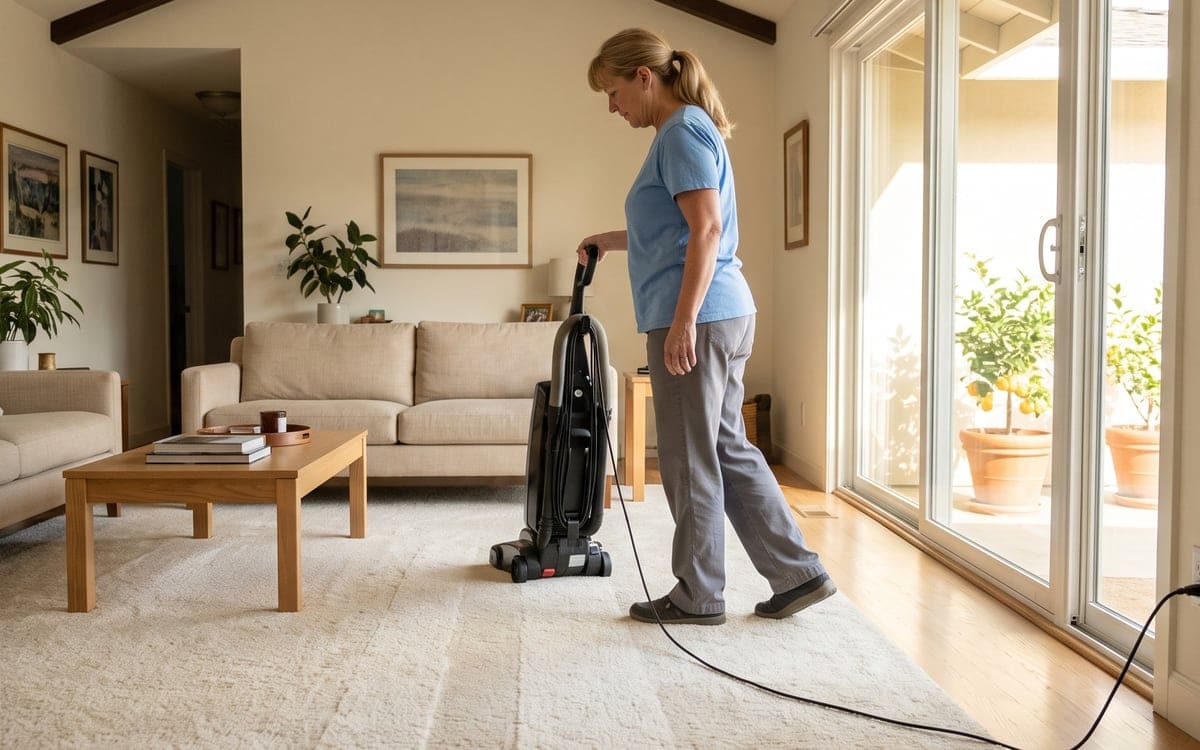
The standard visit, room by room
In the kitchen, the counters get wiped twice. One pass takes the crumbs, a second takes anything the first pass left tacky. The sink is scrubbed around the rim and under the lip of the faucet, where hard water leaves spots or film and makes soap scum. The stovetop takes a wipe, with drip pans and grates lifted and cleaned when they are not fused to anything. The outsides of the fridge, the oven, the dishwasher and the microwave come clean, handles and bases included. Cabinet fronts take a pass where fingers have been, and the floor under the island's toe-kick is part of the visit because the crumbs land there.
Bathrooms carry a lot of work into a small room. The shower or the tub leads, because the surfaces need the longest to dry: tile, grout at the seams, hard water film on the glass, the drain. The toilet is next, bowl to seat to rim to outside. The vanity gets wiped, the mirror cleaned, and the baseboards behind the door close the room. Products are a question for the first call; mixing products is not. Never combine bleach with ammonia, vinegar or any other cleaner.
Dust falls, so a cleaner starts high and works down. Ceiling fan blades are dusted from the floor. Light fixtures and the tops of door and window frames are next in line. Shelves, framed art and lamps follow, and baseboards finish the list.
Rooms people live in get their own rhythm. In a bedroom, the surfaces are the ones a person touches: a nightstand, a dresser top, the lamps, the mirror and the picture frames. Switch plates and baseboards fall into the dust list. The floor is vacuumed, with a pass under the bed where the frame has clearance. A bed is made when the household asks. In a living room, the furniture surfaces, the shelves, the TV stand and the coffee table all take a pass, cushions come up to vacuum underneath, and the remote controls get a wipe.
Floors last. The order protects a mopped floor from the dust and water working above it. Carpets come up with a vacuum, careful along the baseboards where the vacuum head often skips. Hardwood takes a dry pass first and then a damp mop with little water. Tile and vinyl take a damp mop with a mild cleaner. The route runs from the far corner of the home back to the entry.
| Room | In a standard visit | Worth asking for |
|---|---|---|
| Kitchen | Counters, sink, stovetop, outside of appliances, cabinet fronts, floor | Inside the oven glass, inside the fridge, cabinet interiors emptied and wiped |
| Bathrooms | Tub or shower, toilet, vanity, mirror, baseboards, floor | A grout detail pass, inside the medicine cabinet, the shower-door track |
| Bedrooms | Dust surfaces, baseboards, switch plates, vacuum under the bed when it clears | Bed changed with your linens, closet floor cleaned once things are moved |
| Living areas | Furniture surfaces, under cushions, floors, remotes wiped | Baseboards walked end to end, cords and the floor around the TV, bookshelves emptied |
| Entries and halls | Door frames, light switches, mats, floors | Inside the coat closet |
| Windows | Fingerprints on glass that face a room | Sashes, sills and tracks on windows that open from the inside |
A standard visit is one shape of a conversation about a home, and the extras are the second half of that conversation, raised on the call rather than guessed at the door.
A standard visit, and the extras to ask for
What a cleaning covers unless you ask otherwise, and the usual add-ons that are settled on the call.
In a standard visit
- Kitchen counters, sink, stovetop and appliance fronts
- Shower or tub, toilet, vanity and mirror
- Dusting within reach, from the floor
- Floors vacuumed and mopped last
Extras to ask for
- Inside the fridge, the oven glass and the microwave
- Baseboards, blinds and window tracks
- Inside cabinets and drawers
- Beds changed with your linens
Extras worth asking for
A list of extras usually sorts into a handful of groups. Appliance insides: the oven glass, the fridge, the microwave. Windows that open from the inside, with sashes and tracks included. Deep details on surfaces that get a short pass in the regular visit: baseboards along the hall, inside each cabinet, the shower-door track worked by itself. A single visit can include a few of these to catch up a home before a schedule starts.
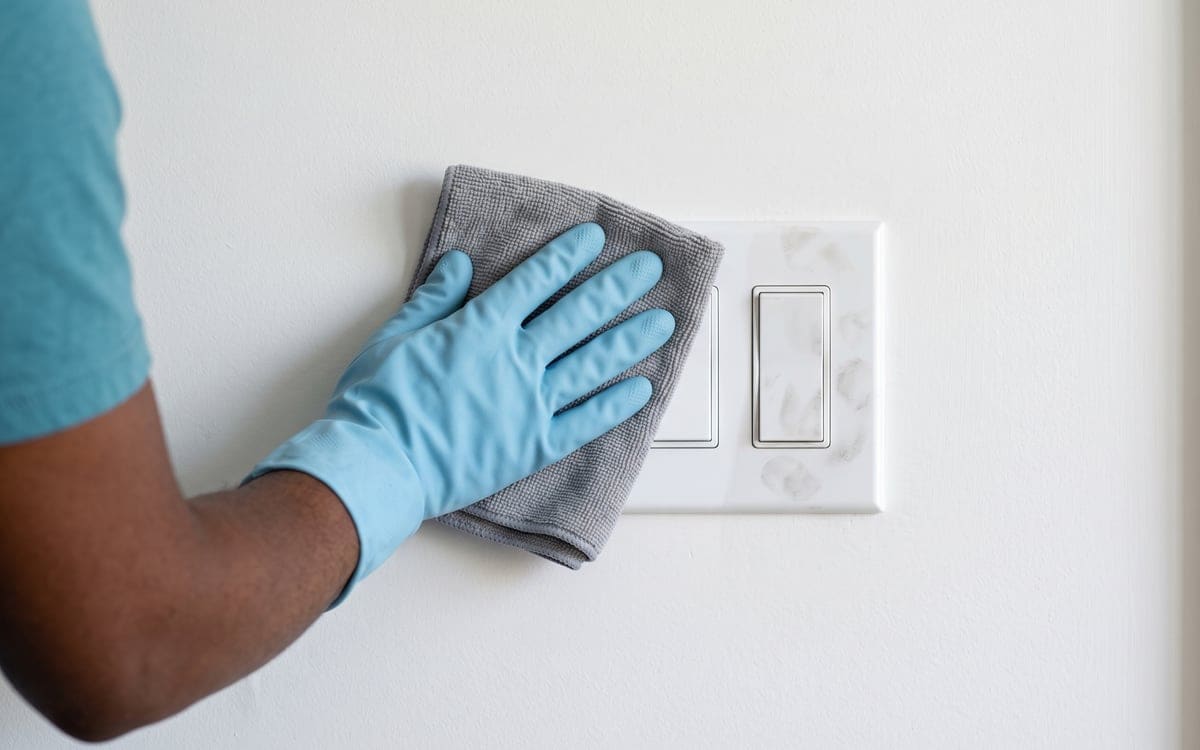
The small items on a day-to-day visit are the ones a household stops noticing but a guest sees first: a smudged switch plate and a dusty light fixture over the entry are common ones. Say which of these matter to you and the cleaner starts there.
Putting first what matters most to you in San Diego
The room you tell us matters most is where the visit starts, and the rest of the standard list follows from there. Tell us on the call which room you walk into after work and want to feel done. USGS says hard water leaves spots or film on glassware and makes soap form soap scum. We agree what gets first attention before anyone opens the door.
The rules of thumb people ask about
Two tidying habits often come up around house cleaning questions online: the 5-5-5 rule and the 80/20 rule. These are habits a household can lean on between visits; they are not how a cleaner plans a visit.
A visit is a per-room list that moves top down and finishes with the floors, built around the home.
What a house cleaner does not do
Surface spots on tile and grout are as far as we go on mold. Growth that spreads, growth on drywall or wood, musty smells or anything after a leak is a mold professional's work. Peeling paint on an older sill is not sanded or dry-swept; that one belongs with the landlord or a painter. Drains do not get opened with chemicals, and chemicals already in the cabinet that need to go are taken by the household to the City's household hazardous waste facility. We do not haul chemicals away.
Outside windows above the ground floor are a window cleaner's territory. Carpet shampooing, upholstery extraction, duct cleaning, biohazard, hoarding and crime-scene work are other trades. Only light furniture gets moved during a visit; nothing heavy is moved alone, and nothing goes up a ladder. High dusting is done from the floor, and anything out of reach stays alone. Deep or regular covers what shifts when a deep visit is on the table, and the cost guide walks through what moves the price.
How to ask for what you want
A first call runs smoother with a short list in hand. The home size (rooms and baths), when it was last cleaned top to bottom, the building and how we get in, pets, a product you want used or avoided, the one or two rooms that matter most, and any extra you want added. That is the shape of the call.
The order on the day works the same way. If the household's priority is a kitchen a family returns to after work and a bathroom a guest will see first, the cleaner starts in those two rooms with those surfaces named. If the household's priority is the room nobody looks at (a baseboard behind a sofa, the top of a bookshelf, the inside of a shower-door track), the cleaner starts there and works outward. The visit covers the standard list either way; the order comes from you.
A regular maid service stop runs the standard list on a schedule. A weekly or every-other-week schedule holds the surfaces steady. A single visit is for a stretch between schedules or a day that needs a reset. The visit shape is the same across all three; what shifts is the pace and the depth of what gets reached.